

Sustainability at Matrix Concepts.

Governance.

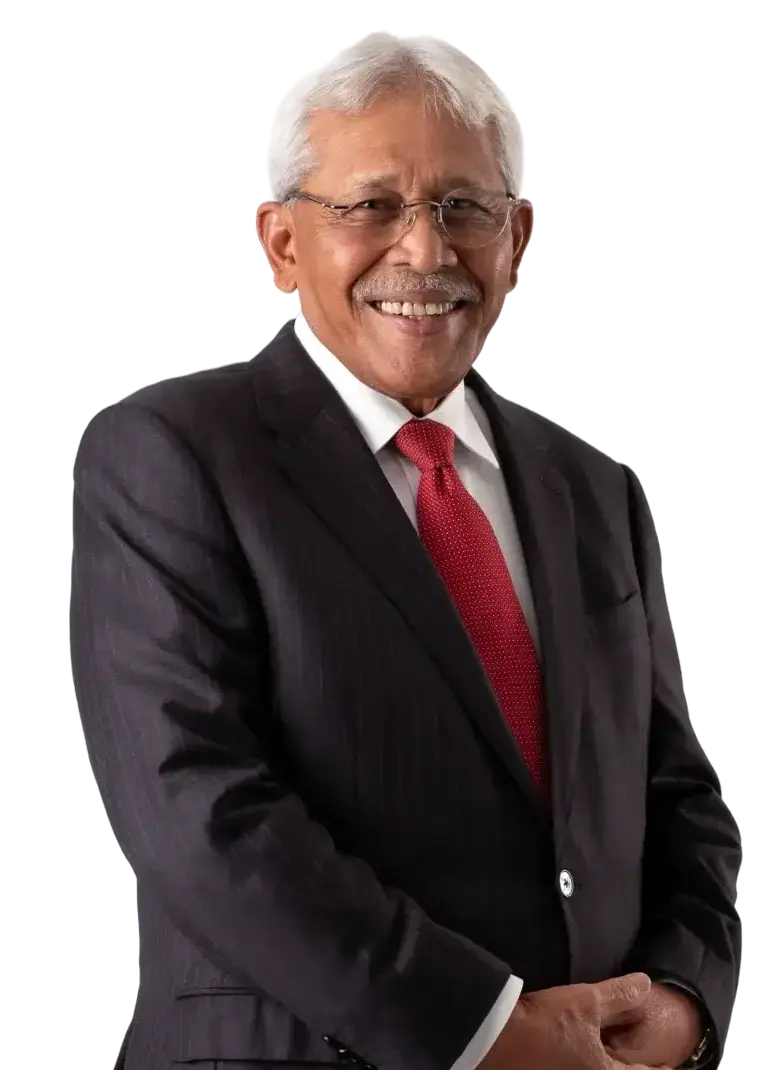
Sustainability is key to how Matrix Concepts operates, governed by a dedicated Sustainability Committee led by its Chairman, Dato’ Haji Mohamad Haslah bin Mohamad Amin. The committee brings together representatives from all business units to oversee our ESG initiatives, track performance against targets, and report directly to the Board. This ensures that sustainability is not just a policy statement — it is embedded in how decisions are made across every part of the business.

Board of Directors

Executive and Non-executive Directors.

  • Holds ultimate accountability for Matrix’s long-term sustainability and climate-related risk management and strategy.
  • Reviews and endorses the Group’s ESG and climate agenda, including major policy positions and resource allocations.
  • Regularly reviews sustainability and climate-related risks and opportunities that may affect financial performance, operational continuity, and long-term strategic growth.
  • The Chair of the Sustainability Committee is a member of the Board and oversees climate-related risks at both Committee and Board levels.
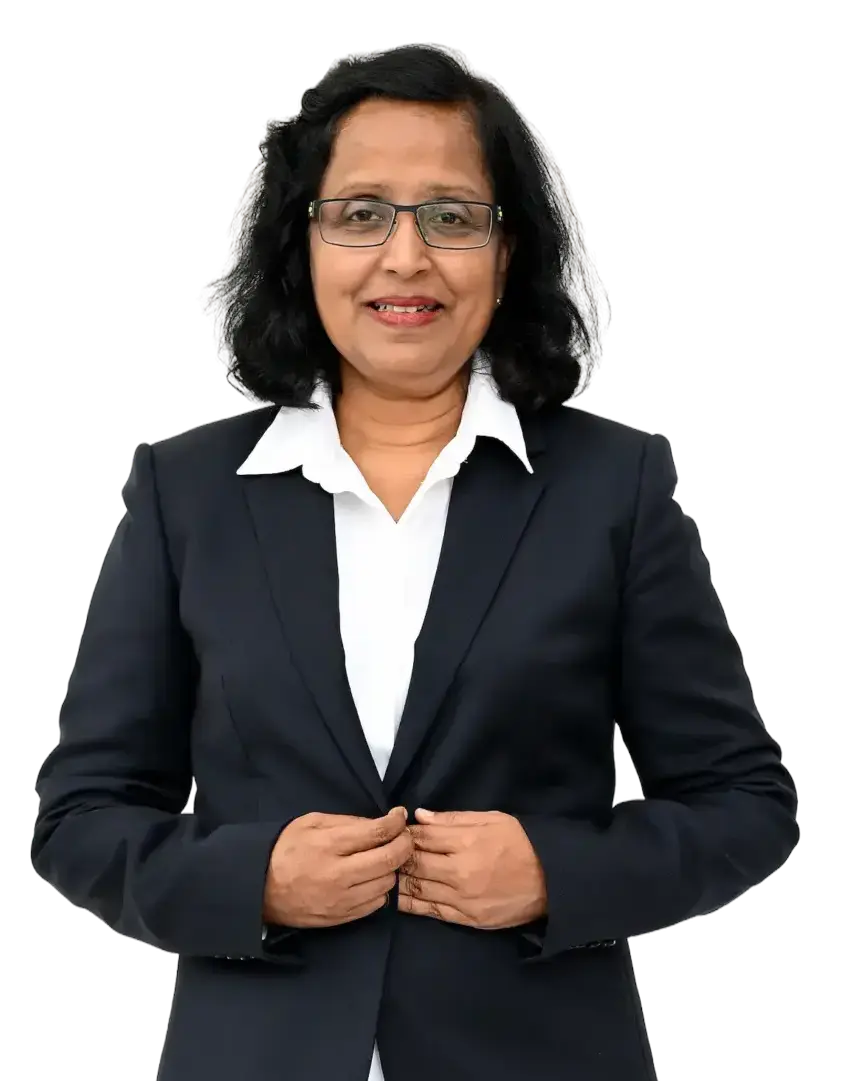
  • Vijayam A/P Nadarajah

    Vijayam A/P Nadarajah

    (Independent Non-Executive Director)

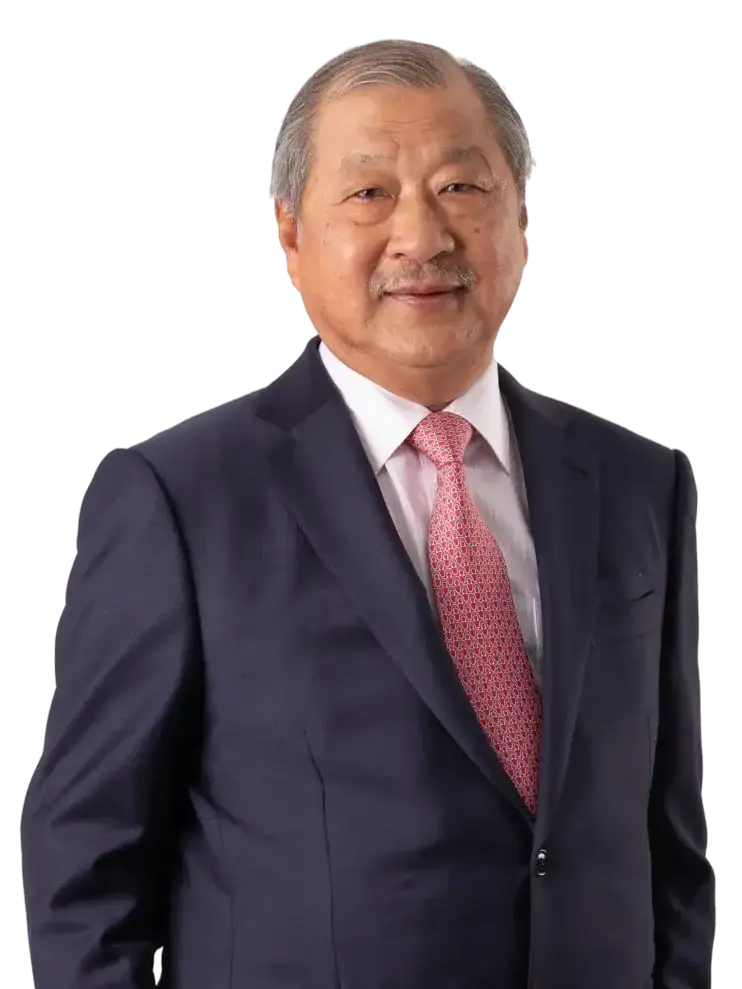
  • Dato’ Seri Lee Tian Hock

    Dato’ Seri Lee Tian Hock

    (Group Executive Deputy Chairman)

  • Dato’ Haji Mohamad Haslah Bin Mohamad Amin

    Dato’ Haji Mohamad Haslah Bin Mohamad Amin

    (Chairman)

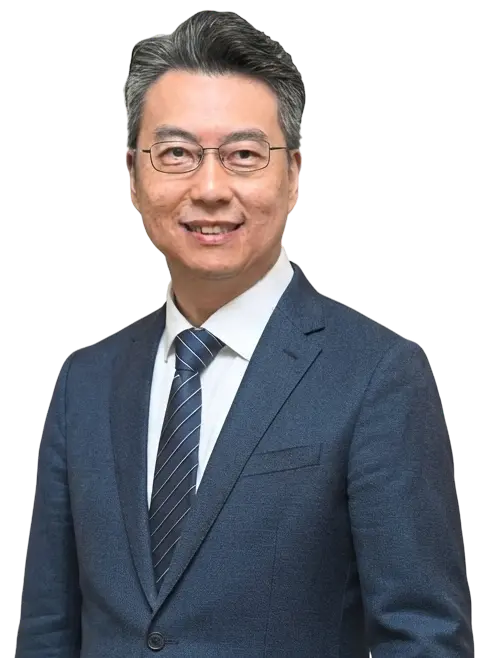
  • Kelvin Lee Chin Chuan

    Kelvin Lee Chin Chuan

    (Group Managing Director)

  • Chai Keng Wai

    Chai Keng Wai

    (Co-CEO, Property Development)

Sustainability Committee

  • Develops and approves Group-wide sustainability priorities, policies, processes and governance procedures.
  • Monitors ESG performance against agreed KPIs, targets and risk-mitigation plans.
  • Tracks emerging sustainability risks (including climate, human rights, occupational health and safety), assessing potential impacts on financial and non-financial value creation.
  • Collaborates with the Risk Management Committee to integrate sustainability into enterprise-risk frameworks.
  • Reviews and signs off the annual Sustainability Report to ensure transparent, accurate disclosure.
  • An Executive Director representing the Board will be elected to chair the Sustainability Management Team and will have full oversight of climate change risks, which will be escalated to the Sustainability Committee.

Sustainability Management Team.

Executive Director, Sustainability Officer and Senior Management of Matrix.

  • Serves as the executive gateway for all sustainability and climate initiatives before escalation to the Board-level.
  • Reviews and refines proposals, briefing papers, KPI dashboards and risk assessments from the Sustainability Task Force, ensuring they align with commercial objectives and the Group's ESG framework.
  • Allocates budget, assigns cross-functional resources and resolves operational issues to enable effective implementation of approved initiatives.
  • Drives stakeholder engagement and internal awareness, equipping staff and business units with the knowledge and tools to meet ESG objectives.

Day-to-day Implementation

Sustainability Task Force (“STF”)

Executive Director, Sustainability Officer and Senior Management of Matrix.

  • A cross-functional working group to translate and operationalise approved sustainability policies, strategies, initiatives and pilot programmes across Matrix's business divisions.
  • Reports progress, challenges and learning back to the Management Team for review and onward escalation as required.
  • Fosters collaboration across divisions to embed sustainability in everyday decision-making.
  • Assesses climate-related risks through a dedicated process, evaluating their likelihood, potential impact and complexity before developing response plans for significant risks, such as flooding.
  1. 01

    Comprehensive Board oversight on material ESG topics, as well as risks and opportunities arising from these topics.

  2. 02

    Board and Senior Management receive timely reports on ESG matters, thereby enabling them to remain updated on ESG initiatives and programmes.

  3. 03

    The governance structure enables the development of effective reporting structures between senior leadership as well as the working level.

  4. 04

    Enables quick and effective two-way dissemination of information and promotes the development of an ESG oriented culture across the organisation and the value chain.

Matrix applies a 5% sustainability weightage to the annual performance assessment of all executive staff. For the Group Managing Director (GMD), this includes Scope 1 and Scope 2 GHG emissions performance. The Group will periodically monitor and review its emissions reduction progress to support its decarbonisation ambitions.

Sustainability Framework.

Matrix Concepts Holdings Berhad’s ESG journey is guided by our comprehensive Sustainability Framework outlined below. We have set ambitious goals and priorities across each ESG dimension and identified 19 key material matters crucial for driving excellence in our ESG performance.

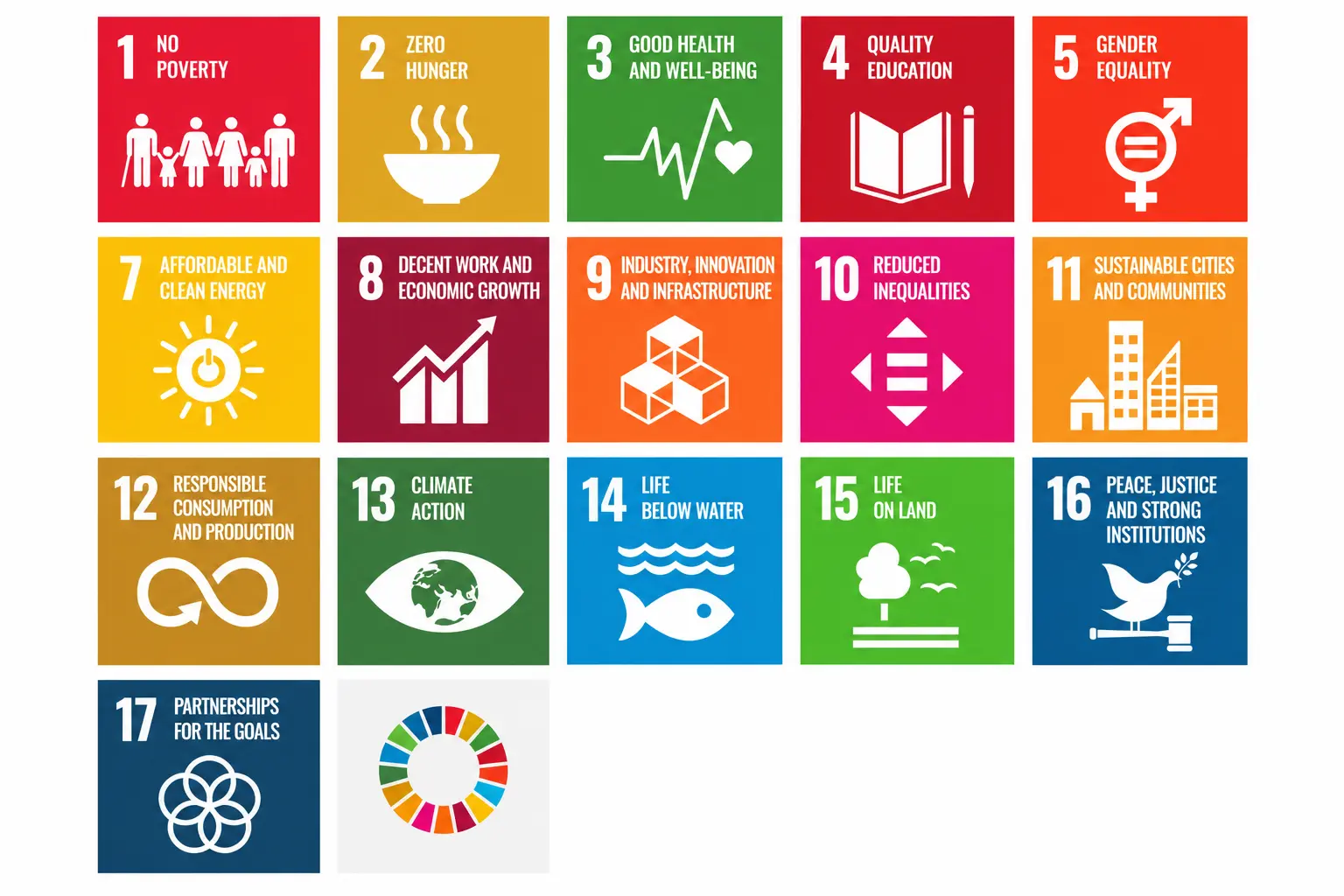
Our framework also aligns with 16 of the 17 United Nations Sustainable Development Goals (SDGs). We are dedicated to implementing strategies that will position us as a leader in the real estate sector.

It covers Environmental stewardship, Social responsibility, and Governance — with specific KPIs tracked against each of our 19 identified material matters.

1c07f1fe895a69eb2f70dc7d43d9ba90d54be00b

As climate change intensifies, Matrix recognises the physical risks from extreme weather and the transition risks arising from changing policies and the shift to a low-carbon economy. We are committed to progressively decarbonising our operations, strengthening climate resilience, and supporting Malaysia’s net-zero aspiration for 2050 and the goals of the Paris Agreement.

Matrix contributes to the following trade associations’ objectives by participating in policy discussions, industry events, and initiatives aimed at improving the regulatory framework and promoting best practices in property development. We are committed to take appropriate action to ensure consistency between our climate change policy and the positions taken by our trade associations as follows:

  • Real Estate & Housing Developers’ Association (REHDA)

    Matrix actively participates in discussions on responsible property development aligned with Malaysia’s National Policy on Climate Change 2.0, National Energy Transition Roadmap (NETR) and green-building practices, including GreenRE assessment.

  • Climate Governance Malaysia (CGM)

    Through its CGM membership, Matrix supports stronger corporate climate governance aligned with the Paris Agreement, Malaysia’s Nationally Determined Contribution (NDC) and National Policy on Climate Change 2.0, while advancing climate-risk oversight and disclosure.

  • Construction Industry Development Board (CIDB)

    Through its construction activities, Matrix supports sustainable construction and carbon reduction guided by CIDB’s MyCREST, Green PASS and Sustainable INFRASTAR assessment tools, which promote lifecycle carbon assessment and improved environmental performance.

Matrix has reviewed the climate positions of its key trade associations to identify any differences from its own commitments. Where a material difference arises, we will engage the association and request changes to its climate policy position or advocacy. If the issue remains unresolved within a reasonable period, we may reconsider our membership or support, particularly where the position conflicts with the goals of the Paris Agreement. Executive leadership will oversee these reviews and report material findings to the Board Sustainability Committee.

Economic.

FY2026 direct and indirect economic performance, presented alongside FY2024 and FY2025 for clear year-on-year context.

Direct Economic Performance

DescriptionFY2024FY2025FY2026
Group revenue (RM'000)1,344,0731,150,7311,373,781
Group profit before tax (RM'000)332,406274,923290,941
Group profit after taxation attributable to equity holders of the Company excluding non-controlling interest (RM'000)244,308214,026217,814
Total assets (RM'000)2,689,9293,245,0494,098,662
Cash flow and bank balances (including cash and cash equivalents) (RM'000)328,285119,92136,414
Earnings per share (sen)19.516.311.6
Market capitalisation (RM'000)2,252,4252,515,2092,383,818

Indirect Economic

DescriptionFY2024FY2025FY2026
Payments to employees (RM'000)104,717112,577108,941
Payments to suppliers and partners (RM'000)587,758471,912644,838
Payments to Government (RM'000)86,55060,07868,416
Repayment to providers of capital (RM'000)226,558175,051326,783
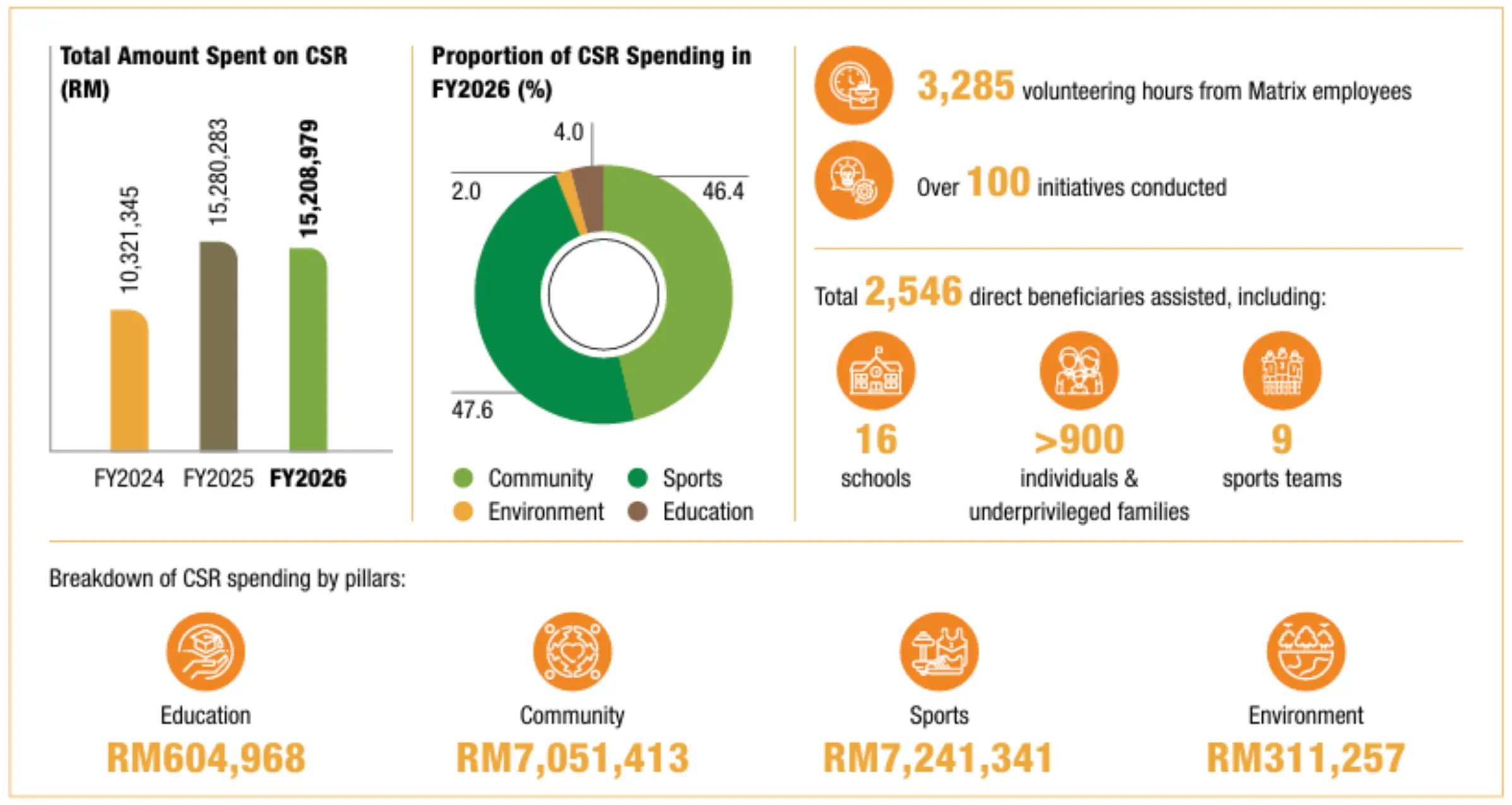
Monies distributed for community development (RM'000)10,32115,28015,209
Economic value retained (RM'000)414,482345,618119,125

For more detailed insights into our financial and business performance, including revenue streams, property sales, divisional highlights, and strategic direction, readers may refer to the Group’s IAR2026.

Environmental.

Climate Strategy

Climate Strategy

Internal Carbon Pricing.

Since FY2026, Matrix has used internal carbon pricing to support capital investments that contribute to carbon neutrality. The estimated value of emissions reductions is factored into investment decisions across its operations.

Internal Carbon Price:

RM1 per tCO2e

Climate Strategy

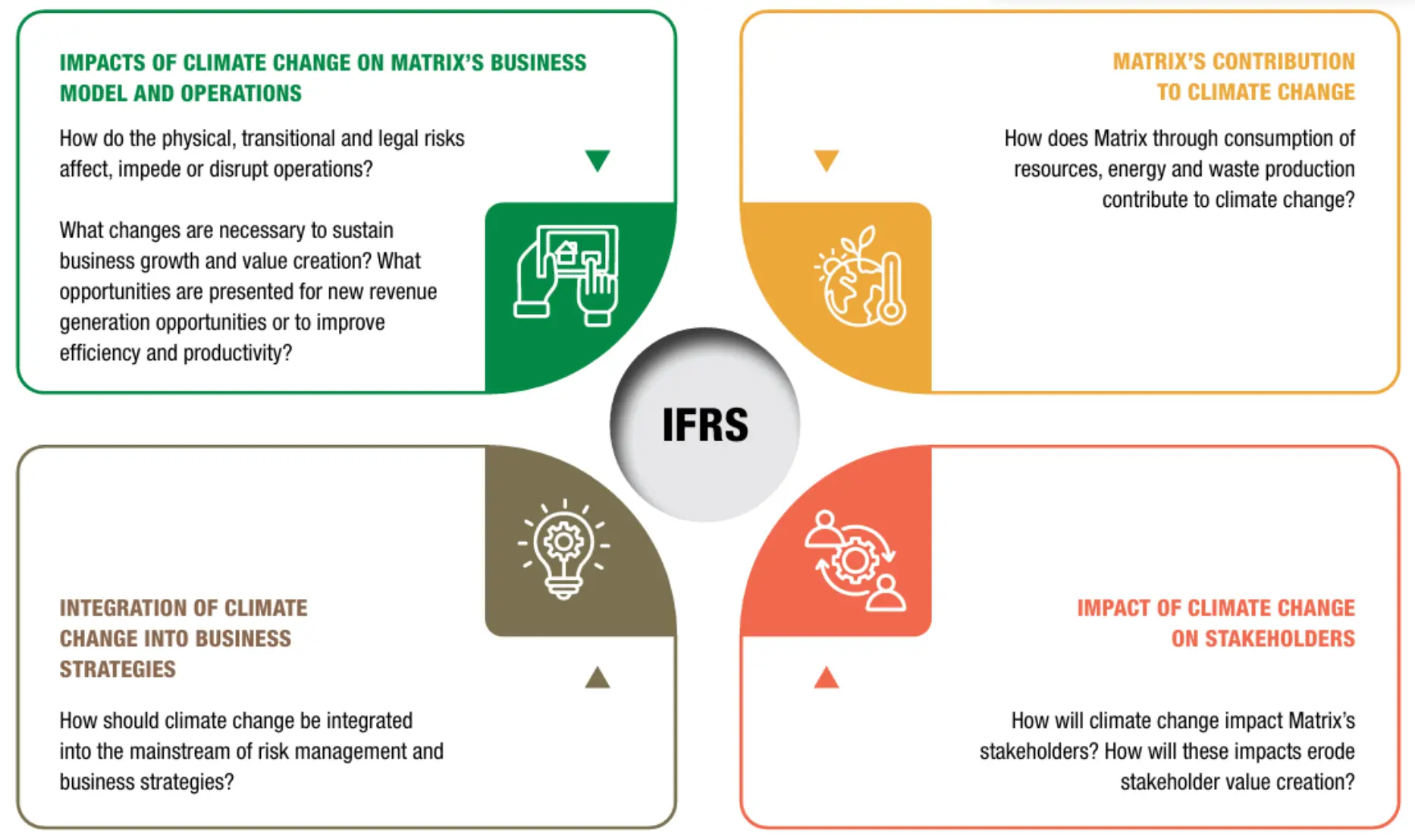
TCFD refers to the Task Force related Financial Disclosures.

Impacts of climate change on Matrix's business model and operations

  • How do the physical, transitional and legal risks affect, impede or disrupt operations?
  • What changes are necessary to sustain business growth and value creation?
  • What opportunities are presented for new revenue generation opportunities or to improve efficiency and productivity?

Matrix's contribution to climate change

  • How does Matrix, through consumption of resources, energy and waste production, contribute to climate change?

Integration of climate change into business strategies

  • How should climate change be integrated into the mainstream of risk management and business strategies?

Impact of climate change on stakeholders

  • How will climate change impact Matrix's stakeholders?
  • How will these impacts erode stakeholders value creation?
Supported United Nations Sustainable Development Goals

  • SDG 8: Decent Work and Economic Growth
  • SDG 9: Industry, Innovation and Infrastructure
  • SDG 10: Reduced Inequalities
  • SDG 11: Sustainable Cities and Communities
  • SDG 12: Responsible Consumption and Production
  • SDG 13: Climate Action
  • SDG 16: Peace, Justice and Strong Institutions

Social.

Human Rights Principles

In FY2026, the Group’s consistent financial growth is driving enhanced value distribution among its key stakeholders.

Human rights principles

Furthermore, Matrix has established comprehensive policies to uphold human rights across its operations and safeguard the rights of all stakeholders, particularly its workers, including foreign workers at Matrix operational sites:

Human rights policies

Workforce Composition

Workforce Composition

Workforce Breakdown by Age

Workforce Breakdown by Age

Workforce Breakdown by Ethnicity

Workforce Breakdown by Ethnicity

Human Rights Principles

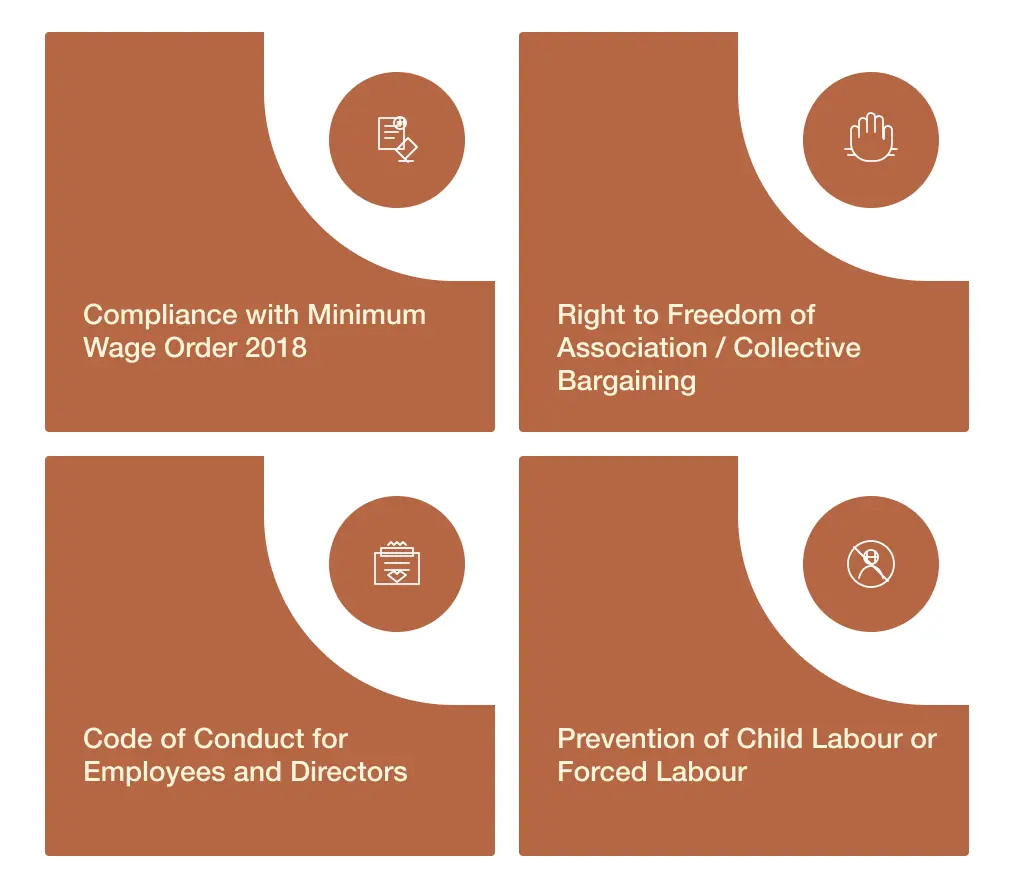
  • Compliance with Minimum Wage Order 2018
  • Right to freedom of association and collective bargaining
  • Code of conduct for employees and directors
  • Prevention of child labour or forced labour

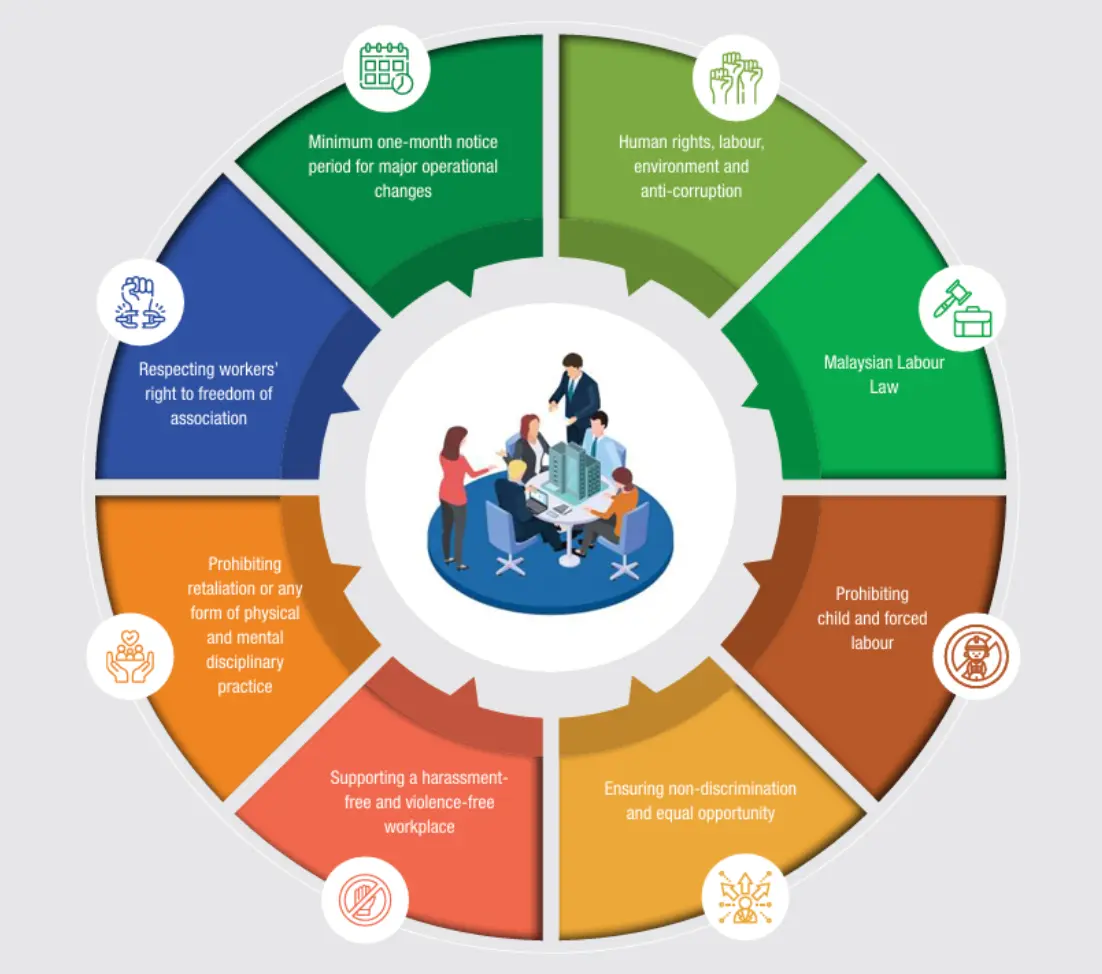
Human Rights, Labour, Environment and Anti-corruption Commitments

  • Human rights, labour, environment and anti-corruption
  • Malaysian Labour Law
  • Prohibiting child and forced labour
  • Ensuring non-discrimination and equal opportunity
  • Supporting a harassment-free and violence free workplace
  • Prohibiting retaliation or any form of physical and mental disciplinary practice
  • Respecting worker's right to freedom of association
  • Minimum one-month notice period for major operational changes

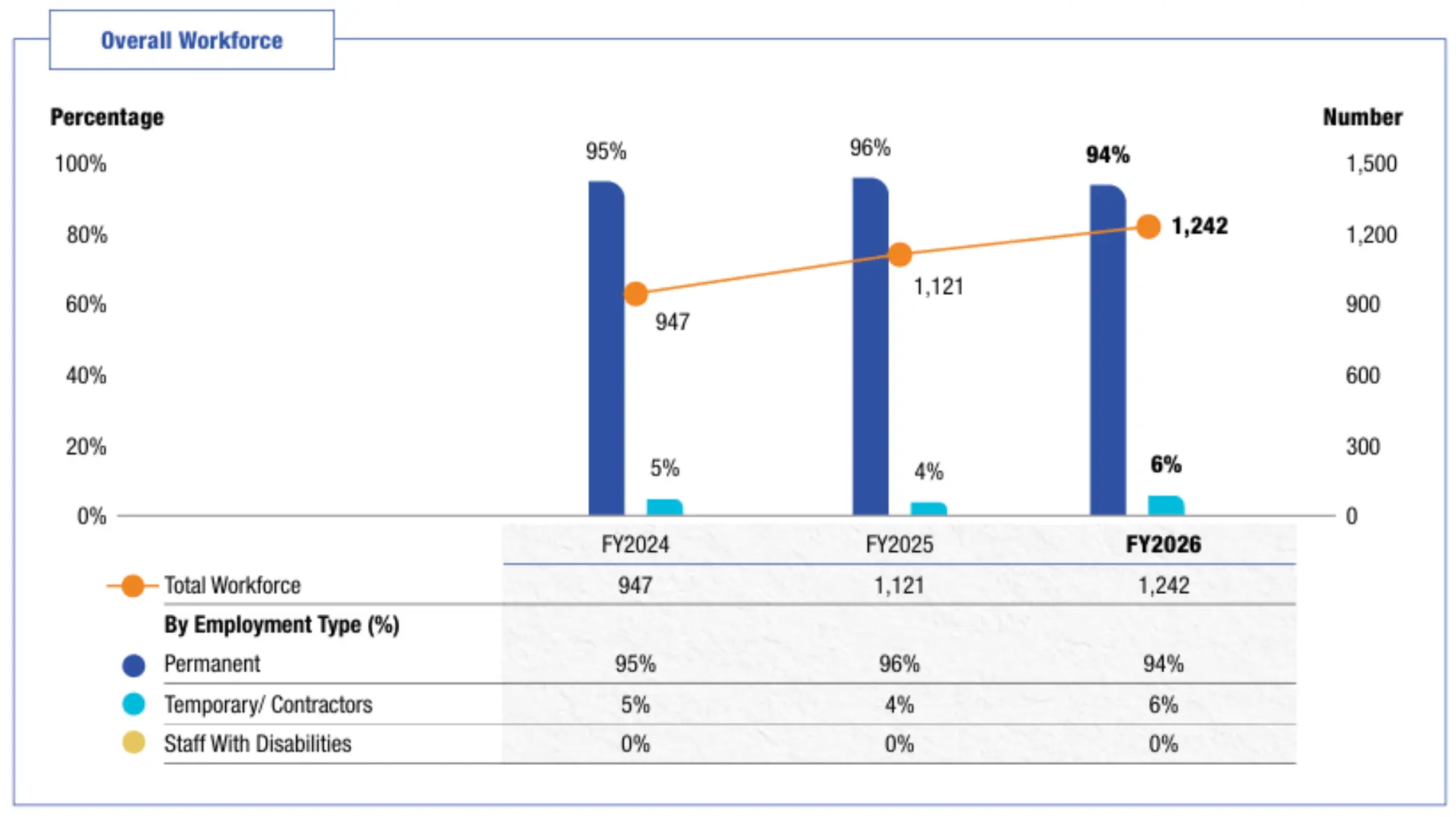
Workforce Data

Workforce data for FY2023, FY2024 and FY2025
IndicatorFY2023FY2024FY2025
Permanent employees97%95%96%
Temporary/Contractors3%5%4%
Staff with disabilities0%0%0%
Total workforce9129471,121

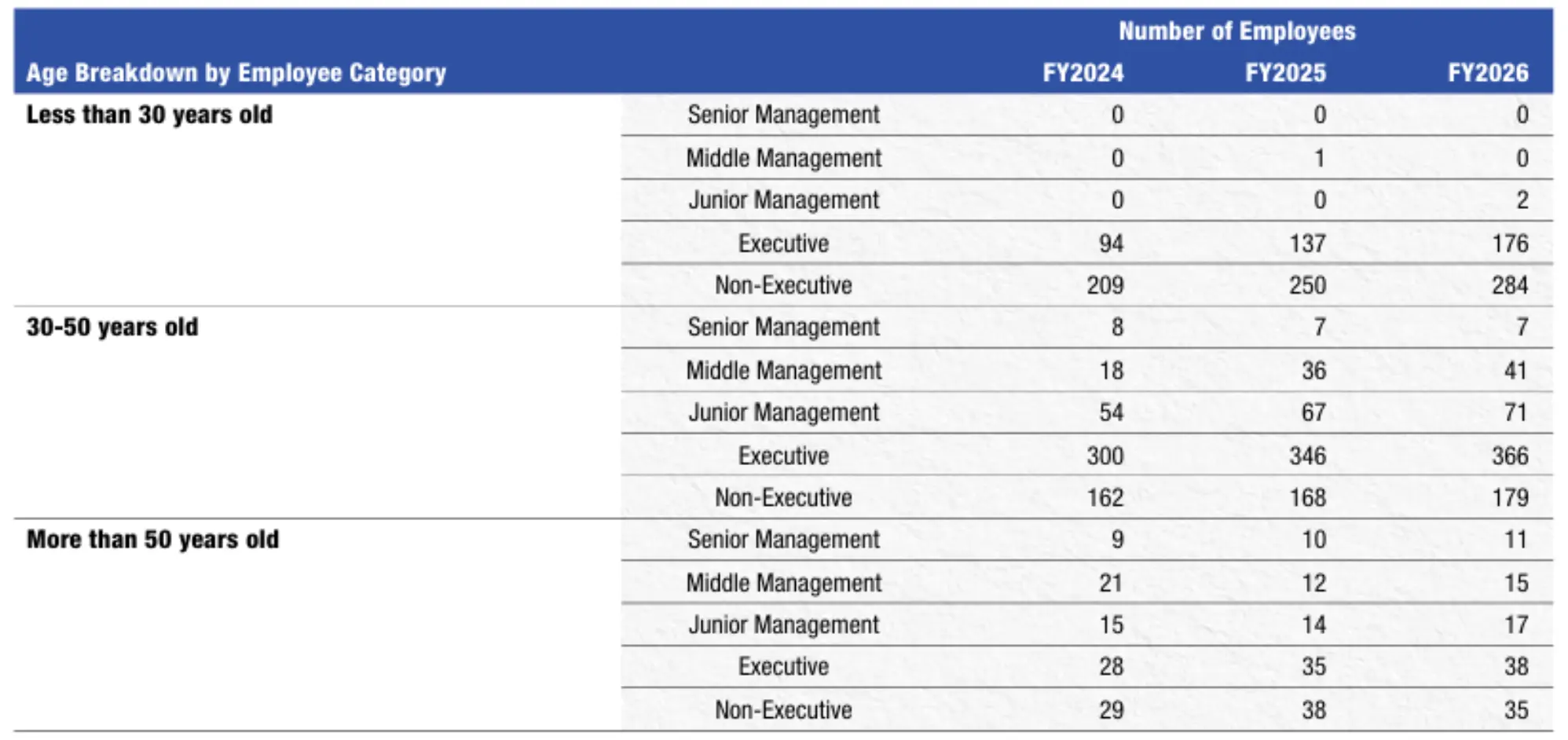
Age Breakdown By Employee Category

Age breakdown by employee category, business unit and employee level
Age GroupEmployee LevelMatrix (HQ)EducationHealthcareHospitalityTotal
Less than 30 years oldSenior Management-----
Less than 30 years oldMiddle Management--1-1
Less than 30 years oldJunior Management-----
Less than 30 years oldExecutive9627113137
Less than 30 years oldNon-Executive51517420250
30-50 years oldSenior Management3-4-7
30-50 years oldMiddle Management13316436
30-50 years oldJunior Management587-267
30-50 years oldExecutive174946711346
30-50 years oldNon-Executive301410915168
More than 50 years oldSenior Management522110
More than 50 years oldMiddle Management732-12
More than 50 years oldJunior Management112-114
More than 50 years oldExecutive15173-35
More than 50 years oldNon-Executive20610238

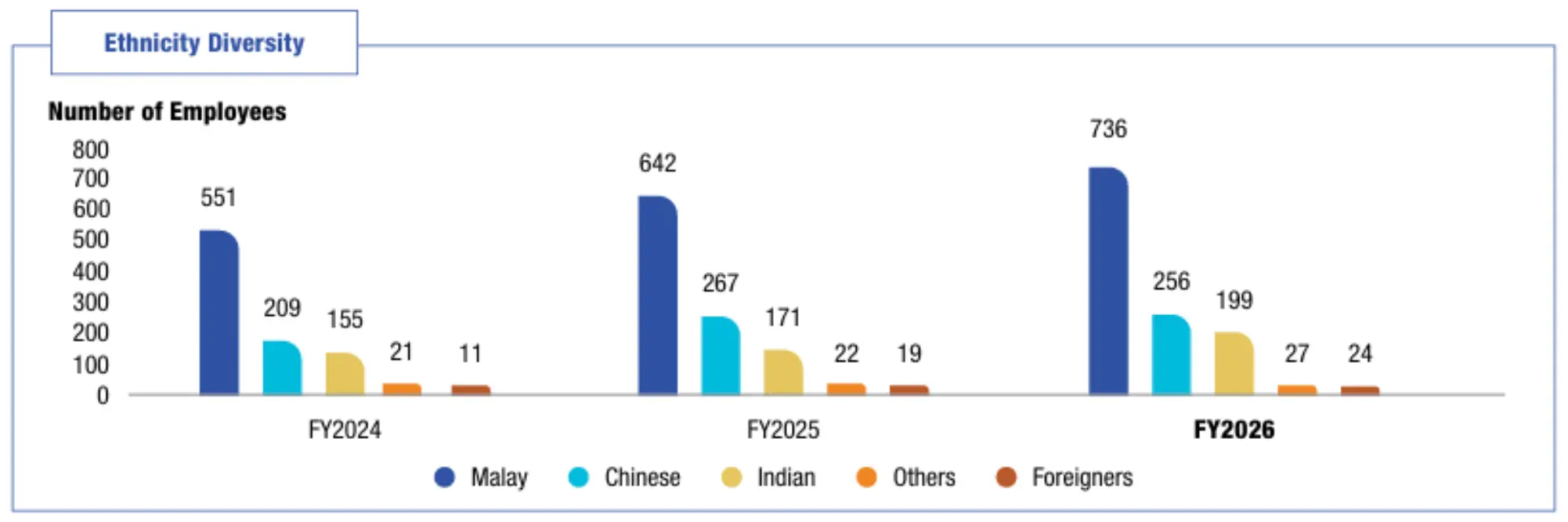
Ethnic Diversity

Ethnic diversity workforce data for FY2023, FY2024 and FY2025
YearMalayChineseIndianOthersForeigners
FY2023523201157229
FY20245512091552111
FY20256422671712219

HSE Management

  • Occupational Safety & Health Act ("OSHA") 1994 with Regulations
  • OHSAS 18001: Occupational Safety & Health Management System
  • Occupational Safety Health Environment ("OSHE") Management
  • MS 1722: Occupational Safety & Health ("OSH") Management System

CSR Contributions

CSR contributions for FY2023, FY2024 and FY2025
IndicatorFY2023FY2024FY2025
Community, Education and Sports (RM)8,263,34110,264,31515,280,283
Environmental (RM)057,030109,230

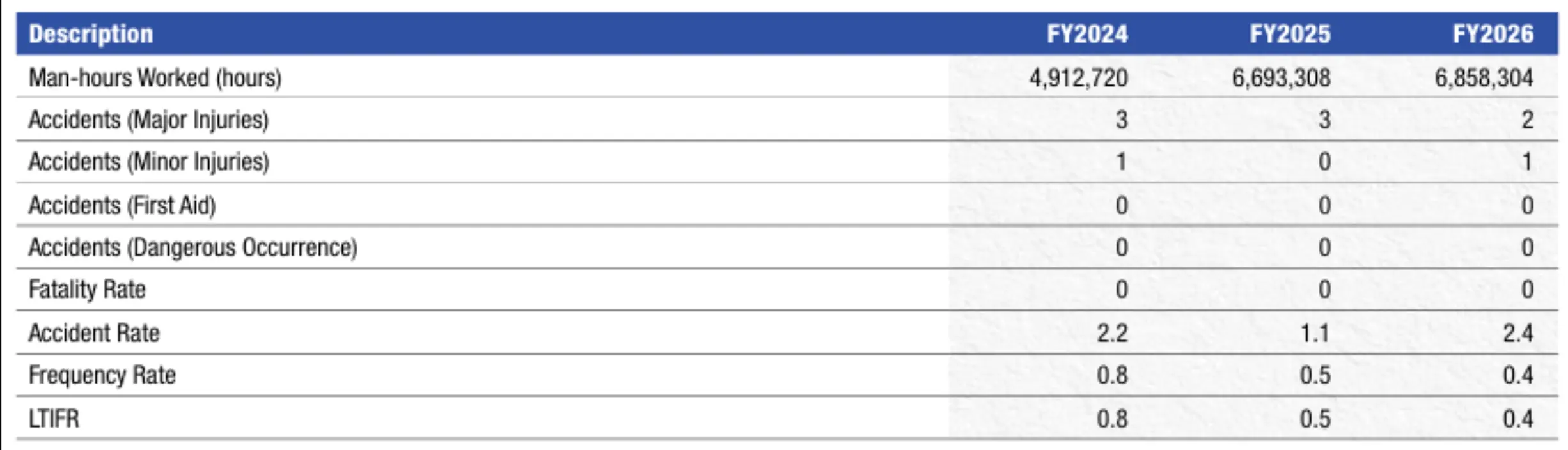
HSE Performance

HSE performance for FY2023, FY2024 and FY2025
IndicatorFY2023FY2024FY2025
Man-hours worked (hours)3,142,8004,912,7206,693,308
Accidents (Major Injuries)-33
Accidents (Minor Injuries)-1-
Accidents (First Aid)---
Accidents (Dangerous Occurrence)---
Fatality rate---
Accident rate-2.21.1
Frequency rate-0.80.5
LTIFR-0.80.5

- indicates zero occurrence.

HSE Performance.

Occupational Safety and Health (“OSH”) is at the core of our governance framework, beginning with a comprehensive set of policies that ensure strict compliance with Malaysian regulations and international standards. Collectively, the Group aligns with:

  • Occupational Safety & Health Act (“OSHA”) 1994
  • Occupational Safety, Health, Environment (“OSHE” Management
  • ISO 9001:2015 – Quality Management System
  • ISO 45001:2018 – Occupational Health and Safety Management Systems
HSE performance

CSR

The Group encourages and recognises employee volunteering through structured CSR
programmes, including the Matrix Foodbank Drive, environmental conservation and
community clean-up initiatives. In formulating each CSR programme, specific volunteer
targets are established, covering the number of volunteers required, their roles and
functions, and the duration of participation, with volunteer contributions and programme
outcomes tracked to assess social impact.

CSR contributions